
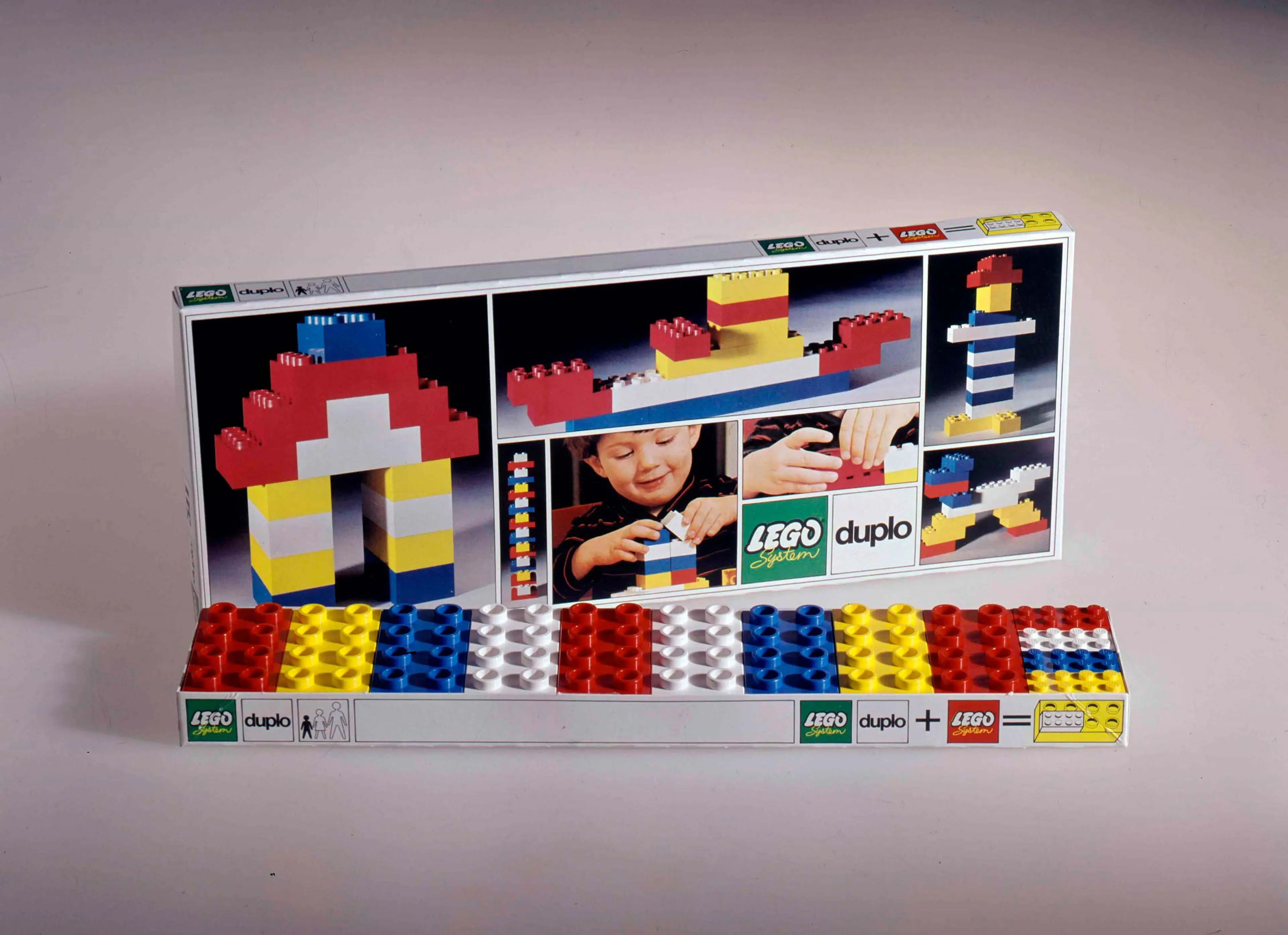
LEGO Duplo system
1969
The LEGO Duplo system was first introduced globally in 1969, featuring larger, safer bricks designed for preschoolers that were fully compatible with standard LEGO bricks. The name "Duplo" comes from the Latin word duplus, meaning "double", because the bricks are twice the size of regular LEGO bricks in all dimensions.
Features of the 1969 Duplo System
The initial 1969 product launch was simple, focusing on the fundamental brick for open-ended play for children as young as 18 months old.
Compatibility: The key innovation, patented in 1967, was hollowing the studs on the underside of the Duplo brick. This allowed standard LEGO bricks to fit on top, creating a "System in Play" that grew with the child.
Color: The first bricks were available in four basic colors: red, yellow, blue, and white.
Safety and Size: The larger size of the bricks made them easier for small hands to manipulate and significantly reduced the choking hazard associated with smaller parts.
Logo: Early sets featured a green LEGO logo, with the specific "Duplo" logo featuring the now-famous rabbit introduced later.
1969 Duplo Sets
The first sets released were basic assortments of bricks, often sold mixed with some standard LEGO System bricks.
LEGO Set 510: A basic building set with 17 parts.
LEGO Set 511: A slightly larger basic building set with 27 parts.
Bagged Sets: An unnumbered canvas bag of assorted Duplo bricks was also available in some markets, such as the UK.
These initial offerings did not include figures (which were introduced in 1977), animals, or specialized thematic elements, but provided the essential large bricks that defined the system.